Buy torbrowsing.com ?
We are moving the project
torbrowsing.com .
Are you interested in purchasing the domain
torbrowsing.com ?
domain@kv-gmbh.de · 0541-91531010
Buy torbrowsing.com ?
What is a temporal clause?
A temporal clause is a type of subordinate clause that provides information about when an action takes place in relation to the main clause. It usually includes a time-related word or phrase, such as "when," "while," "after," "before," or "since." Temporal clauses help to clarify the timing of events in a sentence and are commonly used in complex sentences to show the sequence of actions. **
What is the temporal context?
The temporal context refers to the time period or timeframe in which an event, situation, or piece of information occurs or is relevant. It helps to provide a framework for understanding the sequence of events and the historical or current significance of a particular topic. Understanding the temporal context is important for interpreting and analyzing information accurately within its historical or current timeframe. **


Similar search terms for Temporal
Top-Angebote
Products related to Temporal:
-
Fusion Finds Portable Travel Door Lock Extra Security Privacy Lock For Hotels, Apartments & Home Portable Travel Door Lock Extra Security Privacy Lock For Hotels, Apartments & HomeEnjoy greater peace of mind wherever you stay. This portable travel door lock adds an extra layer of protection to hotel rooms, apartments, dorms, and rental properties, helping you feel safer and more secure. Designed for travelers, solo...29,97 $*Shipping: 0,00 $Secure redirect to the provider
-
Fusion Finds Portable Stainless Steel Travel Door Lock Extra Security Privacy Lock For Hotels, Apartments & Bedrooms Portable Stainless Steel Travel Door Lock Extra Security Privacy Lock For Hotels, Apartments & BedroomsSleep with greater peace of mind wherever you are. This portable door lock adds an extra layer of protection to hotel rooms, apartments, dorms, and bedrooms without requiring tools or permanent installation. Crafted from durable stainless steel, it...31,97 $*Shipping: 0,00 $Secure redirect to the provider
-
Tools, Home & Hobby 12.2 Inch Fence Post Extender 10 Pack Adjustable Barbed Wire Arms For Privacy And Pet Security 12.2 Inch Fence Post Extender 10 Pack Adjustable Barbed Wire Arms For Privacy And Pet SecurityKeep your outdoor space safer, more private, and better protected without replacing your existing fence. This 10pack of fence height extenders adds 12.2 inches of usable height, helping discourage pets from jumping or escaping. Built from heavyduty...79,97 $*Shipping: 0,00 $Secure redirect to the provider
-
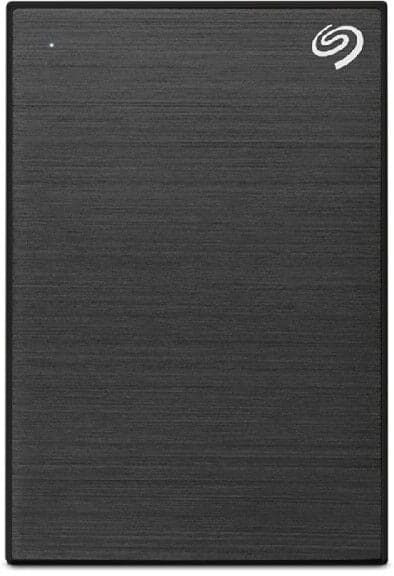
Seagate One Touch, 2TB, Password activated hardware encryption, portable external hard drive, PC, Notebook & Mac, USB 3.0, Black, NewBrand Seagate Product Dimensions 11.48 x 7.8 x 1.17 cm; 148 Grams Item model number STKY2000400 Manufacturer SEAGATE Series STKY2000400 Colour Black Material Form Factor 2.5-inch Standing screen display size 7 Inches Computer Memory Type DIMM Hard Drive Size 2 TB Hard Disk Description Mechanical Hard Disk Hard Drive Interface USB 3.0 Hard Disk Rotational Speed 5400 RPM Hardware Platform PC, Mac Are Batteries Included No Item Weight 148 g94,99 £*Shipping: 0,00 £Secure redirect to the provider


-
What does the term "temporal error" mean?
Temporal error refers to a mistake or discrepancy that occurs in relation to time. It can occur when there is a mismatch between the timing of events or actions, leading to inaccuracies or inconsistencies in the temporal sequence. In computing, temporal errors can occur when there are issues with the timing or synchronization of processes, resulting in incorrect outcomes or behaviors. Identifying and addressing temporal errors is important to ensure the accuracy and reliability of systems and processes. **
-
How are temporal clauses formed in Latin?
Temporal clauses in Latin are formed using subordinating conjunctions such as "cum" (when), "postquam" (after), "dum" (while), and "antequam" (before). These conjunctions are followed by a verb in the subjunctive mood to indicate that the action of the temporal clause is dependent on the action of the main clause. For example, "cum veniat" means "when he/she comes" and "postquam viderit" means "after he/she sees." These temporal clauses are used to express the time relationship between two actions or events. **
-
Is there actually a temporal version of homesickness?
Yes, there is a temporal version of homesickness known as "time-sickness." Time-sickness is the feeling of longing for a specific time period in the past, such as childhood or a significant moment in one's life. It can be triggered by nostalgia or a desire to relive happy memories from the past. Time-sickness can lead to feelings of sadness, yearning, and a sense of disconnection from the present moment. **
-
How do you form temporal clauses in French?
Temporal clauses in French are formed using subordinating conjunctions such as "quand" (when), "pendant que" (while), "dès que" (as soon as), "avant que" (before), "après que" (after), etc. These subordinating conjunctions are followed by a subject and a verb in the subjunctive mood if the action in the temporal clause has not yet occurred, or in the indicative mood if the action has already taken place. Temporal clauses are used to indicate the timing or sequence of events in relation to the main clause. **


Can there be simultaneous spatial and temporal summation?
Yes, simultaneous spatial and temporal summation can occur. Spatial summation refers to the combination of signals from different locations on a neuron's dendrites, while temporal summation involves the combination of signals arriving at different times. Both types of summation can occur simultaneously, with multiple signals from different locations and at different times converging to trigger an action potential in a neuron. This allows for the integration of spatially and temporally distributed inputs to generate a coordinated response. **
What is the difference between modal and temporal verbs?
Modal verbs are used to express possibility, necessity, ability, or permission, such as can, could, may, might, must, shall, should, will, would. Temporal verbs, on the other hand, are used to indicate the time of an action or event, such as past, present, or future tense verbs like run, ran, running. While modal verbs convey the speaker's attitude or stance towards the action, temporal verbs simply indicate when the action is taking place. **
Top-Angebote
Products related to Temporal:
-
Inspired Living SecureStay Stainless Steel Portable Door Lock Extra Privacy & Travel Security SecureStay Stainless Steel Portable Door Lock Extra Privacy & Travel SecurityWhen youre halfway across the world in a hotel, apartment, or shared room, peace of mind starts at the door. The SecureStay Stainless Steel Portable Door Lock is a compact, easytouse security solution perfect for travelers, renters, or anyone who...26,47 $*Shipping: 0,00 $Secure redirect to the provider
-
Tools, Home & Hobby Honda CRV Retractable Cargo Cover Waterproof Privacy Trunk Security Shade Honda CRV Retractable Cargo Cover Waterproof Privacy Trunk Security ShadeKeep your cargo area private, organized, and protected wherever the road takes you. This Honda CRV cargo cover is custom designed for 20232025 CRV 5seater models, fitting neatly into the original trunk slots without drilling or tools. The flexible...179,97 $*Shipping: 0,00 $Secure redirect to the provider
-
Fusion Finds Portable Travel Door Lock Extra Security Privacy Lock For Hotels, Apartments & Home Portable Travel Door Lock Extra Security Privacy Lock For Hotels, Apartments & HomeEnjoy greater peace of mind wherever you stay. This portable travel door lock adds an extra layer of protection to hotel rooms, apartments, dorms, and rental properties, helping you feel safer and more secure. Designed for travelers, solo...29,97 $*Shipping: 0,00 $Secure redirect to the provider
-
Fusion Finds Portable Stainless Steel Travel Door Lock Extra Security Privacy Lock For Hotels, Apartments & Bedrooms Portable Stainless Steel Travel Door Lock Extra Security Privacy Lock For Hotels, Apartments & BedroomsSleep with greater peace of mind wherever you are. This portable door lock adds an extra layer of protection to hotel rooms, apartments, dorms, and bedrooms without requiring tools or permanent installation. Crafted from durable stainless steel, it...31,97 $*Shipping: 0,00 $Secure redirect to the provider
-
What is a temporal clause?
A temporal clause is a type of subordinate clause that provides information about when an action takes place in relation to the main clause. It usually includes a time-related word or phrase, such as "when," "while," "after," "before," or "since." Temporal clauses help to clarify the timing of events in a sentence and are commonly used in complex sentences to show the sequence of actions. **
-
What is the temporal context?
The temporal context refers to the time period or timeframe in which an event, situation, or piece of information occurs or is relevant. It helps to provide a framework for understanding the sequence of events and the historical or current significance of a particular topic. Understanding the temporal context is important for interpreting and analyzing information accurately within its historical or current timeframe. **
-
What does the term "temporal error" mean?
Temporal error refers to a mistake or discrepancy that occurs in relation to time. It can occur when there is a mismatch between the timing of events or actions, leading to inaccuracies or inconsistencies in the temporal sequence. In computing, temporal errors can occur when there are issues with the timing or synchronization of processes, resulting in incorrect outcomes or behaviors. Identifying and addressing temporal errors is important to ensure the accuracy and reliability of systems and processes. **
-
How are temporal clauses formed in Latin?
Temporal clauses in Latin are formed using subordinating conjunctions such as "cum" (when), "postquam" (after), "dum" (while), and "antequam" (before). These conjunctions are followed by a verb in the subjunctive mood to indicate that the action of the temporal clause is dependent on the action of the main clause. For example, "cum veniat" means "when he/she comes" and "postquam viderit" means "after he/she sees." These temporal clauses are used to express the time relationship between two actions or events. **
Similar search terms for Temporal
-
Tools, Home & Hobby 12.2 Inch Fence Post Extender 10 Pack Adjustable Barbed Wire Arms For Privacy And Pet Security 12.2 Inch Fence Post Extender 10 Pack Adjustable Barbed Wire Arms For Privacy And Pet SecurityKeep your outdoor space safer, more private, and better protected without replacing your existing fence. This 10pack of fence height extenders adds 12.2 inches of usable height, helping discourage pets from jumping or escaping. Built from heavyduty...79,97 $*Shipping: 0,00 $Secure redirect to the provider
-
Seagate One Touch, 2TB, Password activated hardware encryption, portable external hard drive, PC, Notebook & Mac, USB 3.0, Black, NewBrand Seagate Product Dimensions 11.48 x 7.8 x 1.17 cm; 148 Grams Item model number STKY2000400 Manufacturer SEAGATE Series STKY2000400 Colour Black Material Form Factor 2.5-inch Standing screen display size 7 Inches Computer Memory Type DIMM Hard Drive Size 2 TB Hard Disk Description Mechanical Hard Disk Hard Drive Interface USB 3.0 Hard Disk Rotational Speed 5400 RPM Hardware Platform PC, Mac Are Batteries Included No Item Weight 148 g94,99 £*Shipping: 0,00 £Secure redirect to the provider
-
Is there actually a temporal version of homesickness?
Yes, there is a temporal version of homesickness known as "time-sickness." Time-sickness is the feeling of longing for a specific time period in the past, such as childhood or a significant moment in one's life. It can be triggered by nostalgia or a desire to relive happy memories from the past. Time-sickness can lead to feelings of sadness, yearning, and a sense of disconnection from the present moment. **
-
How do you form temporal clauses in French?
Temporal clauses in French are formed using subordinating conjunctions such as "quand" (when), "pendant que" (while), "dès que" (as soon as), "avant que" (before), "après que" (after), etc. These subordinating conjunctions are followed by a subject and a verb in the subjunctive mood if the action in the temporal clause has not yet occurred, or in the indicative mood if the action has already taken place. Temporal clauses are used to indicate the timing or sequence of events in relation to the main clause. **
-
Can there be simultaneous spatial and temporal summation?
Yes, simultaneous spatial and temporal summation can occur. Spatial summation refers to the combination of signals from different locations on a neuron's dendrites, while temporal summation involves the combination of signals arriving at different times. Both types of summation can occur simultaneously, with multiple signals from different locations and at different times converging to trigger an action potential in a neuron. This allows for the integration of spatially and temporally distributed inputs to generate a coordinated response. **
-
What is the difference between modal and temporal verbs?
Modal verbs are used to express possibility, necessity, ability, or permission, such as can, could, may, might, must, shall, should, will, would. Temporal verbs, on the other hand, are used to indicate the time of an action or event, such as past, present, or future tense verbs like run, ran, running. While modal verbs convey the speaker's attitude or stance towards the action, temporal verbs simply indicate when the action is taking place. **
* All prices are inclusive of VAT and, if applicable, plus shipping costs. The offer information is based on the details provided by the respective shop and is updated through automated processes. Real-time updates do not occur, so deviations can occur in individual cases. ** Note: Parts of this content were created by AI.